You have been successfully signed in.
Account created successfully! Please check your email to verify your account.
Account created successfully! Please check your email to verify your account.
Account created successfully! Please check your email to verify your account.
Course No. 8
Life thrives where it gets lots of its favorite foods.You Breed What You Feed.
Overview
Humans have a unique ability to influence the life around them. We've become experts in breeding many lifeforms, including crops, flowers, farm animals, pets, horses, zoo animals, and so on. Yet, historically, we've been surprisingly disinterested in breeding the most essential form of life for our health: our microbiome. It's time we recognize our expertise and start nurturing our microbiome for better health.
With thousands of species, each in its own microenvironment within the vertical and horizontal zones of the bioreactor, consuming incalculable combinations and permutations of nutrition molecules, fine-tuning nutrition for a healthy microbiome is a monumental challenge, especially given that we are at the very early stages of the Human Microbiome Project.
A diverse microbiome can process a much broader range of nutrition and produce a much broader range of biochemistry needed by the body. Therefore, diets focusing on a narrow range of food types are not well represented in the population with healthy microbiomes. It doesn't matter what food is focused on, only that there is not a lot of diversity in the foods. This makes some sense when you realize that every microbe has its favorite food. If you eat a lot of that food, you'll get a lot of that microbe. Hence, less diverse foods and less diverse microbes. Diverse microbes are associated with bioreactor health.
The best source for the microbes in the bioreactor is the natural environment. Every microbe in the healthy gut got there through everyday living. These microbes are likely constantly entering the bioreactor. The problem is not likely the need for an inoculation from a probiotic. The problem is better addressed by avoiding what harms the microbes, upsetting the balance in the bioreactor ecosystem.
Actionable Knowledge
- When planning nutrition around the microbiome, it's critical to realize we are not trying to feed a particular microbe; we are trying to feed an ecosystem. Each food molecule is a nutrition to a particular microbe, making other molecules slightly less complex and creating nutrition for another species in the ecosystem. Further, if a microbe flourishes, it takes nutrients from another microbe. If a microbe struggles, it does not produce the nutrients for another microbe.
- Most nutritional recommendations and products regarding fiber, probiotics, and prebiotics are driven by colon health, which may be perfectly appropriate for a colon health problem. But if you have a weight or metabolic problem, breeding, feeding, and treating the colon microbes will have little impact.
- Until science catches up, the best strategy is to stop damaging the microbiome and create the environment and nutrition most likely to encourage the natural healing of the microbiome. Many diets focused on particular foods can be effective for temporary weight loss. However, to avoid or reverse metabolic syndrome, obesity, and metabolic disease, the diet needed is based on diverse nutrients, not restricting one nutrient type or another.
- Like diversity in nutrition, science has consistently observed that calorie-restricted diets have health benefits, although it is unclear why. One reason the explanation is elusive is that the approach thus far has been to focus on what people eat when they're eating less. However, the Nutrimatters model suggests that it's what they are not eating due to the fewer calories. If you're eating fewer calories, you're eating less of everything, including foods that breed the wrong microbes for good health and foods that harm microbes.

Top Sponsors of this Course
 Your Name - Your Organization
- Your Name - Your Organization
- Your Name - Your Organization
- Your Name - Your Organization
Related Article
You Breed What You Feed.
Article 8
The success of populations of digestive system microbes is determined mainly by what you feed them.
Read ArticlePrevious Course

If It's Not Protein or Fat, It's Sugar.
Course 7
All sugars, starches, & fibers must be reduced to glucose.
All sugars, starches, & fibers must be reduced to glucose.
When not talking protein or fat, we use terms like sugar, starch, and fiber, but cells can only use glucose. Glucose is the simplest sugar. All sugars, starches, & fibers must become glucose before the cells can use it. From the point of view of cellular nutrition, all foods that are not protein or fat, are a simple sugar named glucose.
Next Course
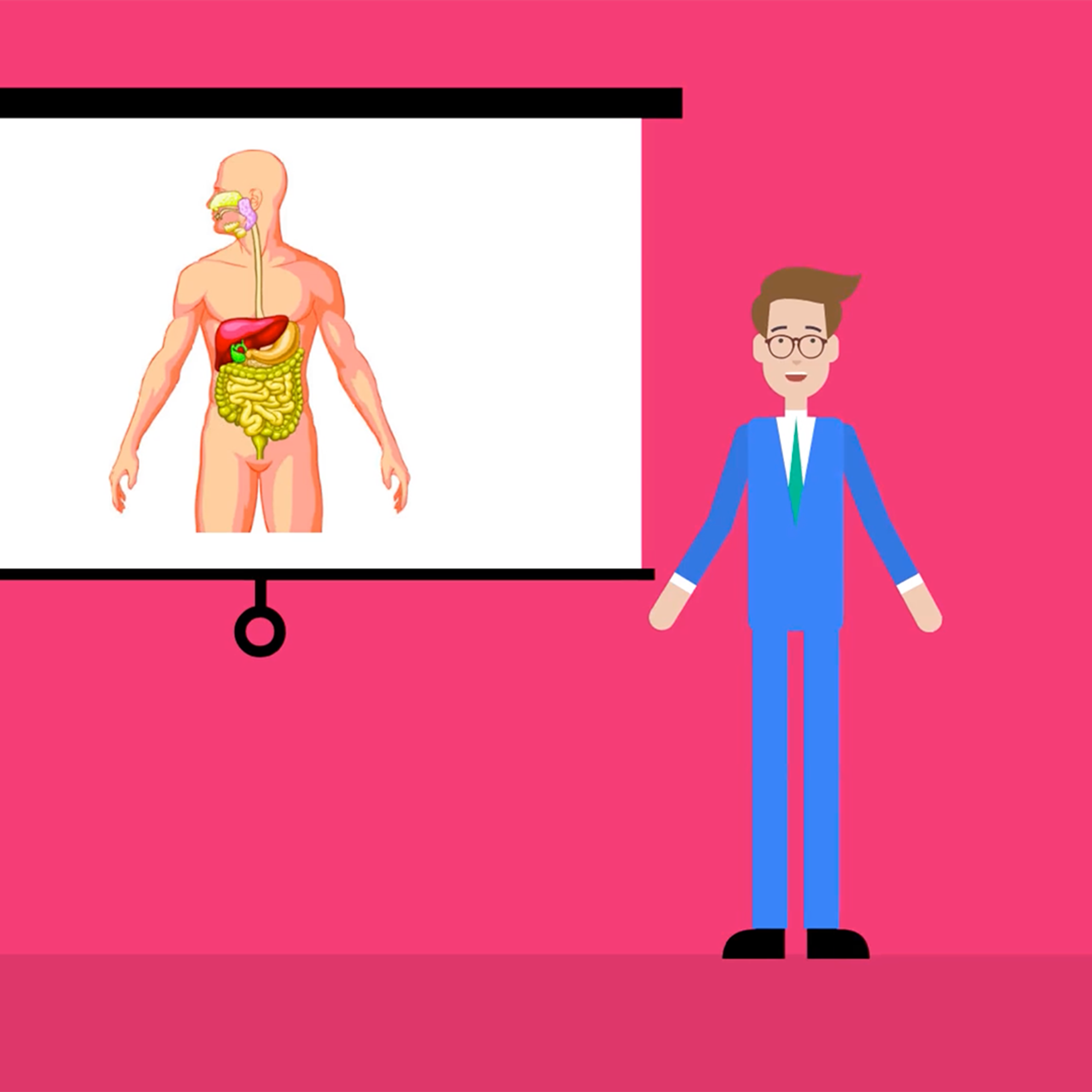
Meet Your Essential Organ, the Bioreactor.
Course 9
Trillions of microbes create essential chemistry.
Trillions of microbes create essential chemistry.
The digestive system is thought of as a tube where nutrients soak into the body. NOT! The small intestine is one of the most complex and biologically significant organs in the body. At about 22 feet long (7 meters), and 400 sq. ft. (37 sq meters) of surface area, with trillions of embedded microbes, it is the body’s energy reactor.
Account created successfully! Please check your email to verify your account.
You have been successfully signed in.
Account created successfully! Please check your email to verify your account.
Account created successfully! Please check your email to verify your account.